AI in Barcode Scanning: Separating Hype From Measurable ROI
Problem
Every scanning vendor now claims to use AI, but the term covers everything from basic image processing to genuinely intelligent context-aware systems. Decision-makers struggle to evaluate which AI capabilities actually improve operations versus which are repackaged features.
Solution
A clear three-level framework for evaluating AI maturity in barcode scanning — from marketing-level claims through damage-tolerant scanning to fully context-aware capture — helps enterprises invest in capabilities that deliver quantifiable returns.
Outcome
- Enterprises using Level 2+ AI scanning report 30-50% fewer manual interventions per shift
- Context-aware Level 3 scanning reducing order errors by up to 80% in multi-code environments
- ROI typically achieved within 4-6 months of deployment for warehouse and retail use cases
Every scanning vendor now claims to be "powered by AI." The term has lost its descriptive power. Decision-makers need a sharper framework to separate genuine capability from repackaged marketing.
The AI Label Is Everywhere — But What Does It Mean?
After working with dozens of Korean enterprises on scanning deployments, Data Connect developed a practical three-level model for evaluating AI maturity in barcode scanning. This framework focuses on what matters most: measurable impact on frontline operations.
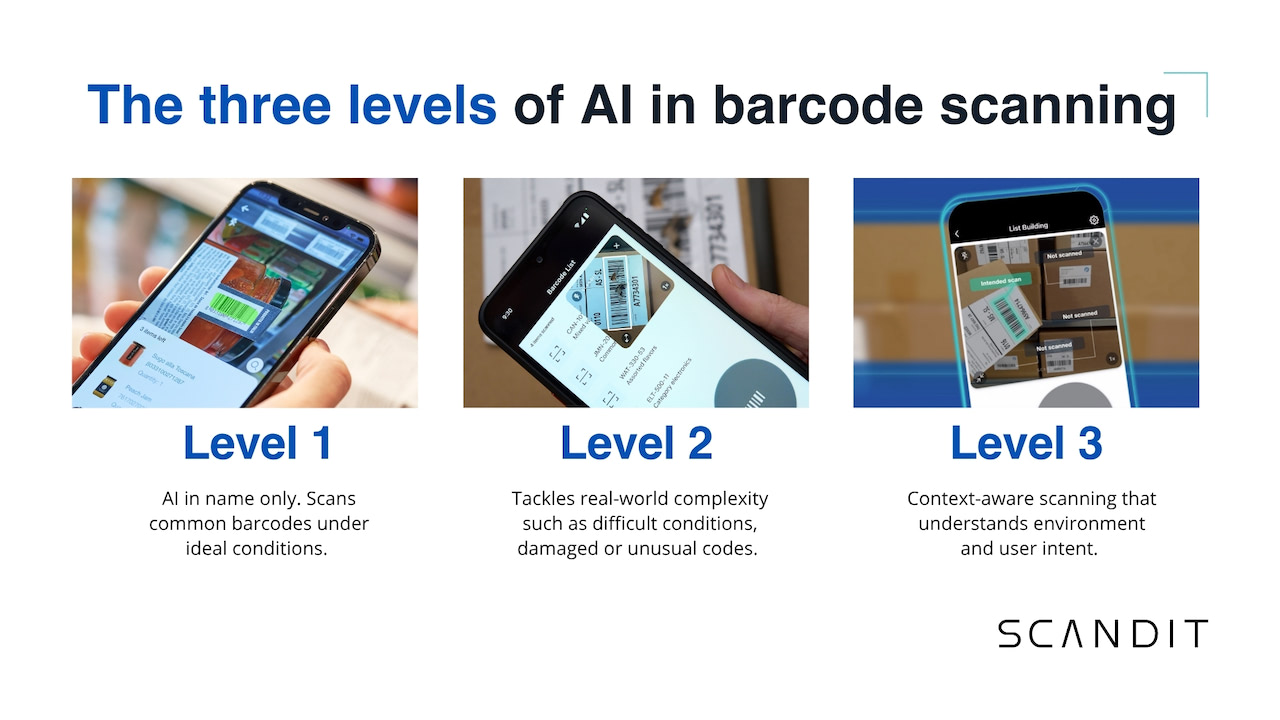
Level 1: Basic Computer Vision With an AI Label
The first level represents the majority of "AI-powered" scanning claims on the market. These solutions use standard computer vision techniques — image preprocessing, contrast enhancement, and conventional decode algorithms — that have existed for years. The AI label is applied for marketing, but the underlying technology has not fundamentally changed.
Level 1 scanners perform adequately in controlled conditions: well-lit environments, undamaged barcodes, and single-code scenarios. They struggle when real-world complexity enters the picture:
- Plastic wrap and curved surfaces
- Poor lighting conditions
- Adjacent codes in close proximity
If your error rate spikes outside of lab conditions, you are likely operating at Level 1.
Level 2: Damage-Tolerant, Environment-Adaptive Scanning
Level 2 represents a genuine technical leap. AI models trained on millions of real-world scenarios learn to handle conditions that defeat conventional decoders:
- Damaged barcodes with missing bars or stains
- Codes printed on reflective or transparent materials
- Low-contrast prints in dim warehouse aisles
The key differentiator is resilience. Scan success rates remain high across the full range of conditions frontline workers actually encounter.
For enterprises, this translates directly into fewer manual interventions, fewer error-driven rework cycles, and faster throughput. The ROI is straightforward: count the manual exceptions eliminated per shift and multiply by labor cost.
Level 3: Context-Aware Scanning That Understands Intent
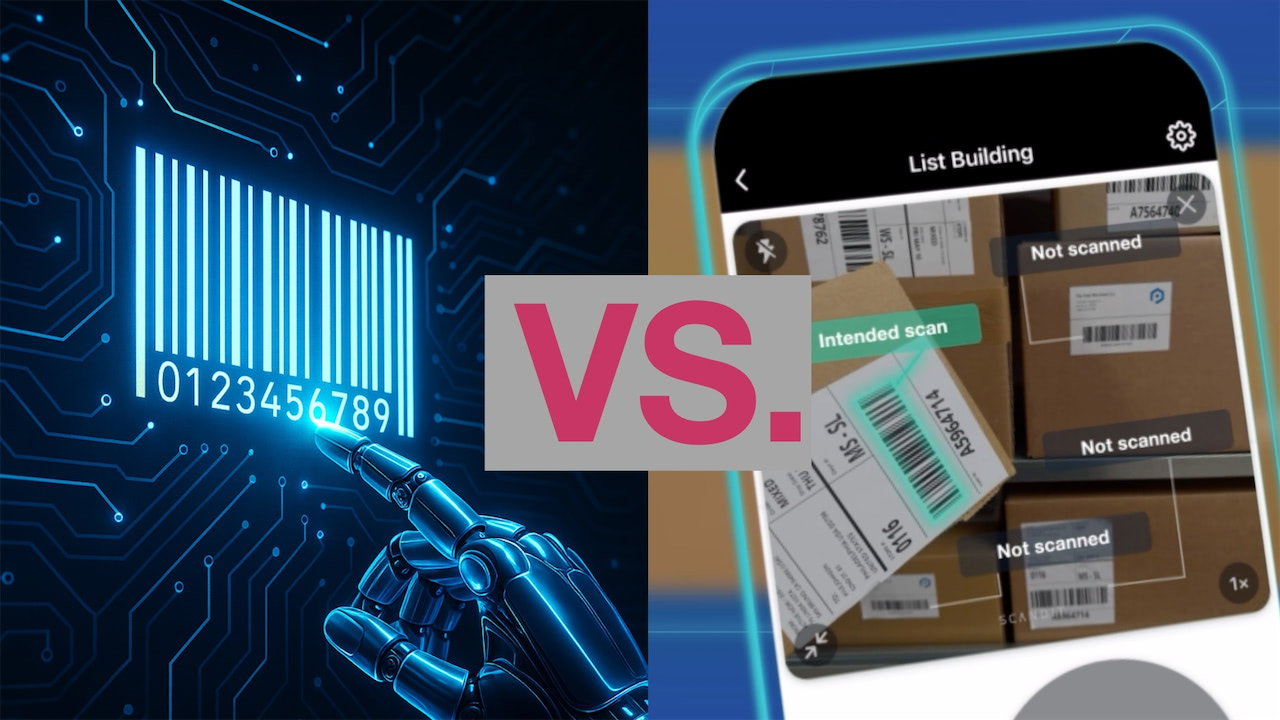
Level 3 is where AI scanning becomes truly intelligent. Rather than decoding whatever barcode the camera sees, context-aware scanning understands what the worker intends to scan and adapts accordingly.
In a dense multi-code environment, it:
- Identifies the target barcode based on position, orientation, and workflow context
- Distinguishes between intentional repeat scans and accidental duplicates
- Falls back to OCR when a barcode is too damaged to decode
This is not incremental improvement — it is a qualitative shift in how scanning integrates with human workflow. For high-volume operations like warehouse picking or retail shelf management, Level 3 can reduce order errors by up to 80% compared to conventional scanning.
Evaluating Your Current Position
The practical question for any enterprise is: what level are you operating at today, and what would moving to the next level be worth?
Data Connect helps Korean organizations answer this with concrete pilot programs that measure real performance gains in their specific environments. The goal is not to chase the AI label but to invest in capabilities that deliver measurable returns.