
GS1 Digital Link 1.7: How Barcodes Connect Products to the Web
Executive summary
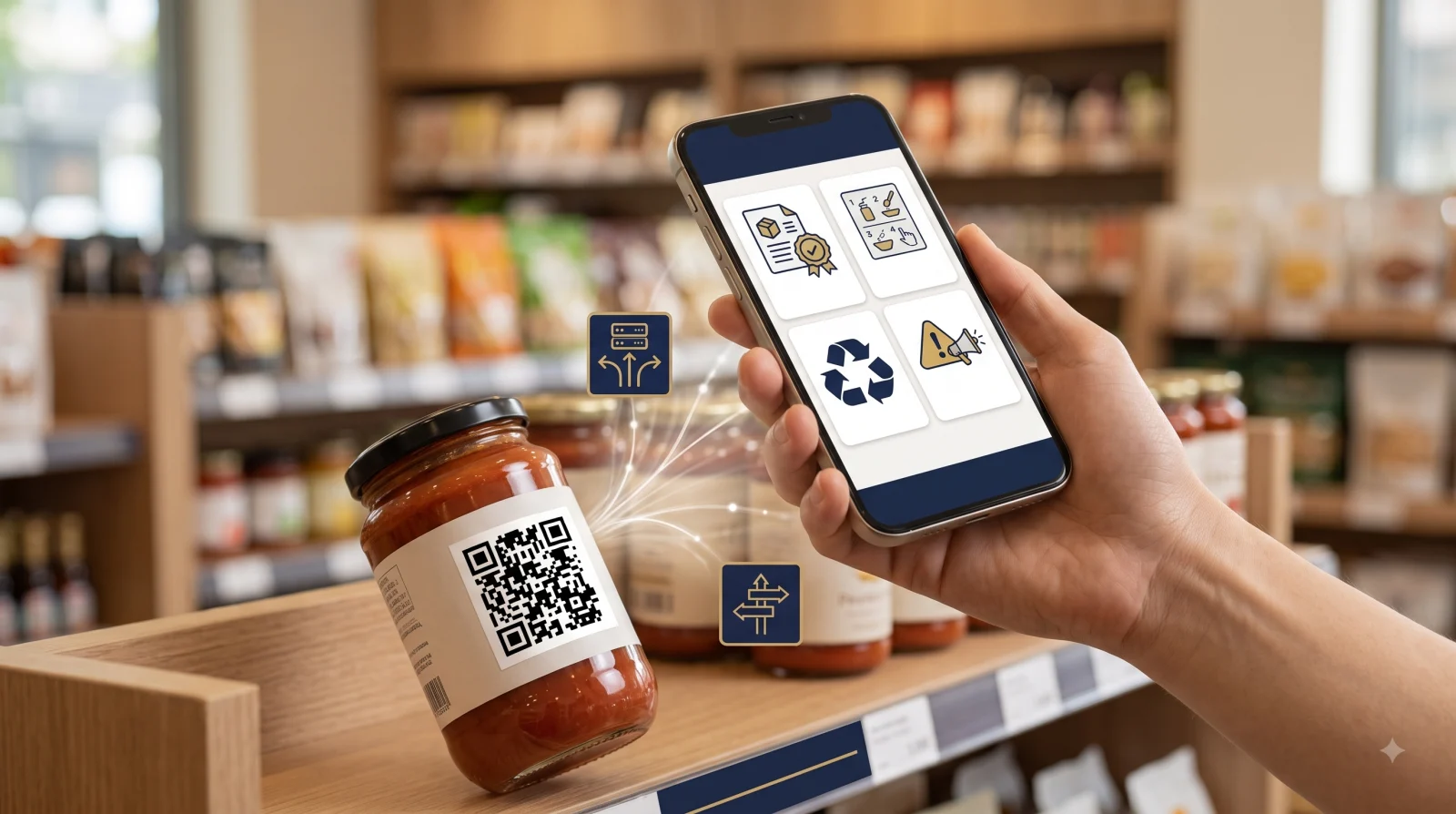
At a retail checkout, the familiar barcode's main job has been to say, “This is the product.” The next generation of 2D barcodes—the square, grid-like kind—can also guide people to product information online. In that sense, a barcode can become a digital address for the product.
GS1 is the international standards organisation behind the barcode rules used around the world. GS1 Digital Link is its common method for connecting a product identifier to the Web. Ratified in August 2026, version 1.7 does not introduce a headline consumer feature. It improves the rules and checking methods that help scanners and business systems read those digital addresses consistently.
In plain terms, version 1.7 does not build a new road. It improves the address format and traffic rules needed as more products connect to the Web. The standard defines an address format; it does not automatically create a product page or linking service.
First, what is GS1?
Imagine picking up a bottle of water in a convenience store. The checkout scans its barcode and displays the product name and price. Another retailer recognises the same barcode as the same product. That works because the product carries an internationally agreed identifier.
GS1 maintains these common rules. Its system identifies products through the Global Trade Item Number (GTIN) and also covers cartons, pallets, locations, and other parts of commerce. Just as Internet addressing rules help different computers find the same website, GS1 rules help different supply-chain and retail systems recognise the same item.
The traditional barcode was a number plate
A familiar 1D barcode—the kind made of vertical lines—mostly acts as a number plate. The scanner reads a product number, and the retailer's database looks up the name and price. The barcode itself does not usually contain that price or a full product description.
A 2D barcode, such as a QR code, can carry more data in a small square. It may include a product number, batch, serial number, or expiry date. It can also contain a Web address that a phone can open.
Imagine one 2D barcode on a shampoo bottle containing a product number, production batch, expiry date, and Web address:
- A checkout reads the product number and uses the store system to find the product and price.
- A distribution centre checks the production batch and expiry date.
- A shopper can open ingredients, instructions, or recycling guidance.
- If a particular production run is recalled, the code can lead to guidance for that batch.
The same QR can therefore serve different needs across the product's journey. Instead of creating a separate code for each system, a business can connect store operations, logistics, and consumer services around the same GS1 product identifier.
These uses still require business systems and product information pages to be configured behind the code. The aim is not to cover packaging with more codes. It is to make one identifier useful and trustworthy in more situations.
Scan a working GS1 Digital Link
Unilever uses this model on products sold today. A food product sold in the UK carries a GS1 Digital Link QR code. The QR code below was generated from the address printed on the real pack.
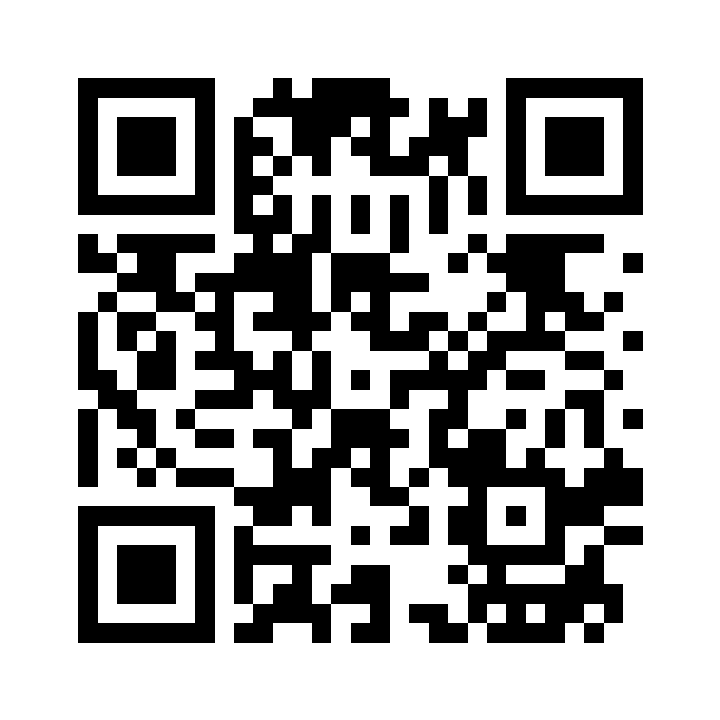
This is the exact data stored in the QR code:
https://dl.ulcp.io/01/08722700750116
dl.ulcp.iois the resolver address used for this product. Unilever operates the connection through Digimarc's platform.01means “the next number is a GTIN product identifier.”08722700750116is the GTIN for this product.
A phone scan follows this path:
product-identification address stored in the QR → resolver reads the GTIN → current product page
Putting the two addresses side by side makes the distinction clear:
- Address stored in the QR:
https://dl.ulcp.io/01/08722700750116 - Current destination:
https://www.knorr.com/uk/p/vegetable-stock-cubes-20pack.html/08722700750116
Opening the address stored in the QR passes through the resolver and arrives at the current product page. The browser may append a long analytics tail describing the scan path, but the core destination is the product page above.
Think of the resolver as an information desk in a building. The QR says, “I am looking for product 08722700750116,” and the desk points to the product page operating today. If the company rebuilds its website later, it can update the resolver's destination without reprinting the QR on every pack. In other words, the QR carries a durable product-identification address, while the page shown to people can change when needed.
This is not a photograph of the packaging. The QR image was generated from a public GS1 Digital Link so readers can try the working address themselves.
GS1 Digital Link connects the product number to the Web
Any ordinary QR code can contain a Web address. But if every company invents its own format, another scanner or retail system cannot easily tell whether a number inside the address is a product number, a serial number, or something else.
GS1 Digital Link defines where product identifiers and related data belong within a Web address. When the connection has been configured, a phone can open the page for a person while a GS1-aware business system extracts the identifier for an operational process.
| Traditional centre of gravity | Direction of GS1 Digital Link |
|---|---|
| Look up a product number | Connect a product to online information |
| Operate inside enterprise systems | Link supply chain, store, and consumer touchpoints |
| Rely on information printed on the pack | Keep the identifier while managing linked information online |
So what changed in version 1.7?
Version 1.7 did not invent a new kind of barcode. Instead, it strengthens three fundamentals that work behind the code.
1. It speaks the latest product-data language
The kinds of data managed by GS1 continue to expand. Version 1.7 aligns the Digital Link address rules with newer data types in the broader GS1 rulebook. It is like adding new words to a dictionary and making sure different systems read them with the same meaning.
2. It recognises specially compressed addresses
Special compressed addresses can express EPC binary identifiers read from radio-based RFID or reduce processing in hybrid UHF/NFC tags. Version 1.7 adds recognition rules for the eh and ex forms used by these addresses.
3. It helps catch bad addresses earlier
One wrong digit or an invalid combination can connect a scan to the wrong information. Version 1.7 makes clearer how GS1's checking resources can help implementations validate identifier formats and data combinations.
For standards teams, the technical summary is: data attributes aligned with General Specifications 26.0, RE3 added for recognising eh and ex compressed URIs, and Barcode Syntax Resource (BSR) validation referenced more explicitly.
The direction of the barcode market
The important change is not only that a barcode can hold more data. It is becoming the closest bridge between a physical product and its online information.
If a printed product identifier remains stable while the information behind it can be updated, packaging becomes a long-lived digital touchpoint rather than a static printed surface. Instructions, certifications, provenance, recycling information, and digital product passports can all use that connection.
The competitive question is changing too. The market once focused mainly on, “Can the scanner read this code quickly?” It must increasingly answer, “Can the identifier connect to accurate information, and can that connection be maintained for the life of the product?”
Infrastructure to prepare alongside GS1 Digital Link
Printing a new 2D barcode on a product is not enough. Businesses also need the systems that provide accurate information and maintain the connection over time.
- Manufacturers still need accurate product data.
- Links need domains and pages that will remain available.
- Scanners and store systems need to support the relevant 2D formats.
- Someone must own updates to the links and information.
- If scan behaviour is collected, privacy boundaries still matter.
A perfectly formatted address is not useful when its destination is outdated or missing. A move to 2D barcodes is therefore both a packaging project and a data-operations project.
Open questions
- How will people know that information is official? Anyone can create a QR code, so brands need a clear way to establish trust in the address and its content.
- Will the Web page outlive the product? Appliances, medicines, and vehicle parts may remain in use long after a campaign page or supplier contract ends.
- Who can see scan data? If organisations collect what people scan, when, and where, they need transparent privacy rules.
Bottom line
GS1 Digital Link 1.7 is not a flashy feature release. It improves the foundations needed as a barcode moves from a product number plate to a digital address.
For consumers, that address can become an entry point to better product information. For businesses, it can connect supply-chain and Web information through the same identifier. The important question is no longer simply, “Should we print a QR code?” It is “What will sit behind that code, and who will keep it trustworthy?”
Data Connect is the official SCANDIT partner in Korea, covering enterprise data capture industry trends and standards.