

6 Vision AI Companies in Retail and Logistics to Watch in 2026
Problem
Most data in retail and logistics is still collected by human eyes and manual work. Inventory counts, shelf checks, and package inspection are slow and error-prone, and the cost accumulates quietly as out-of-stocks, mis-shipments, and waste.
Solution
Vision AI applies AI, machine learning, and computer vision to camera feeds so machines can see, interpret, and act in real time. In 2026, production-grade applications are multiplying fast: drone-based inventory counts, 3D-camera self-checkout, and drive-through pallet scanning.
Outcome
- Gather AI: up to 1,500 pallets scanned per hour with no infrastructure changes
- Mashgin: 99.99% accuracy across 60,000 SKUs; 440M+ transactions in 2024
- Symbotic: total warehouse automation (warehouse automation 2.0), $676M quarterly revenue
- Field-proven vision AI is now the center of gravity for retail and logistics tech investment
Vision AI is becoming the center of gravity for retail and logistics technology investment. Christian Floerkemeier, Scandit's CTO and co-founder, picked six vision AI companies to watch in 2026 — from autonomous warehouse drones to barcode-free checkout to scan frames a forklift can drive straight through. All of it is running in production today.
What Is Vision AI?
Vision AI applies AI, machine learning, and computer vision to visual data, letting machines see, interpret, and act on images, video, and camera feeds in real time. Where computer vision names a decades-old technical field, vision AI describes its productionized, real-world application.
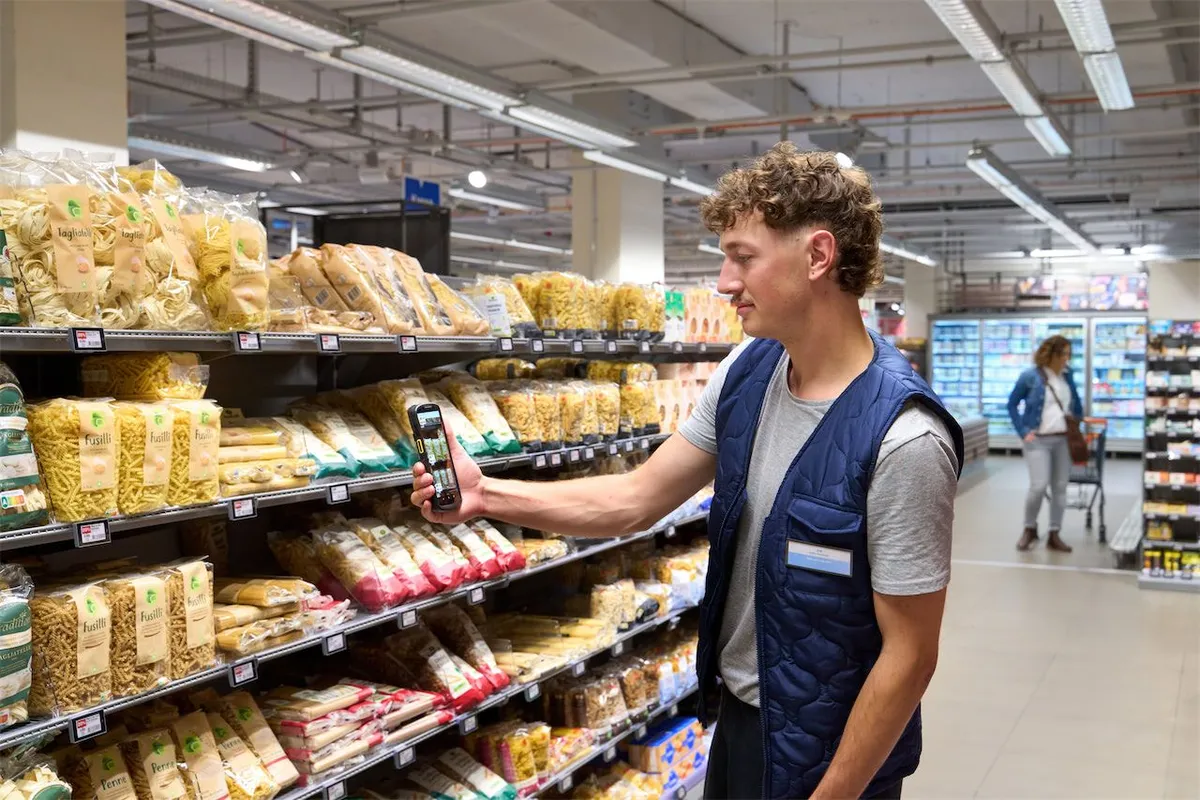
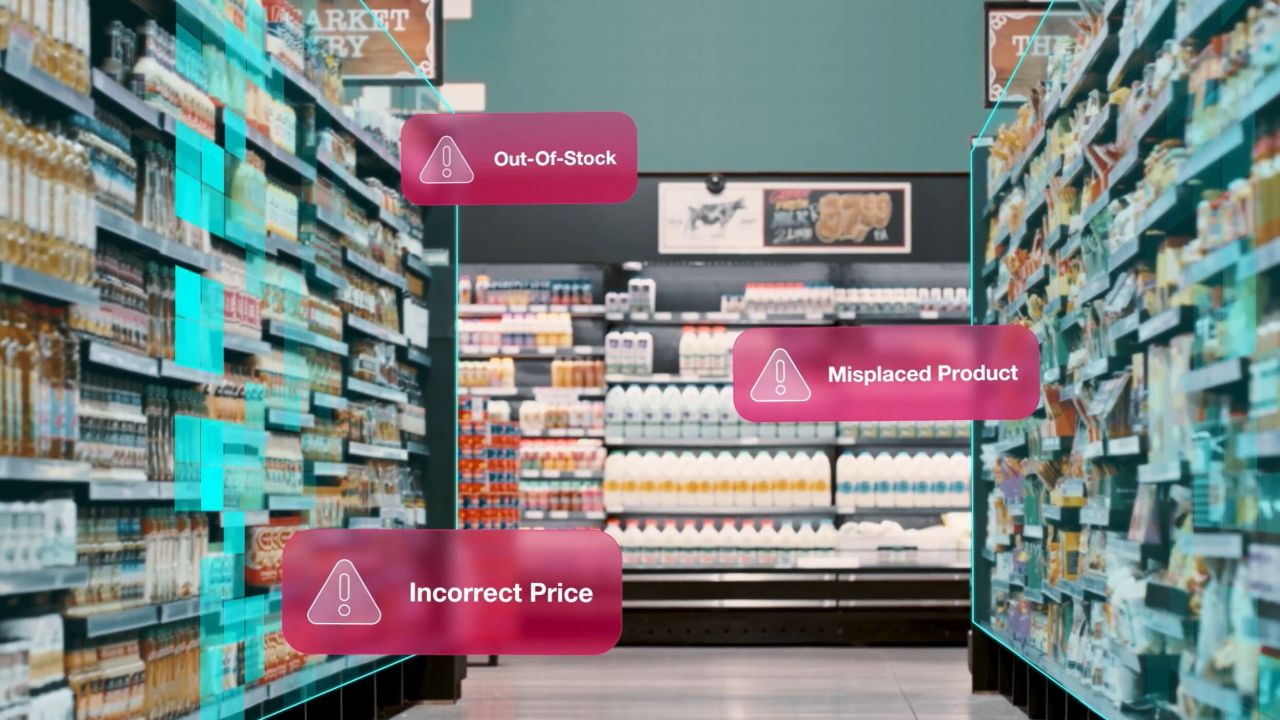
In retail, that means automated inventory management, misplacement and pricing-error detection, and self-checkout. In logistics: package inspection, dock monitoring, and autonomous robot navigation. The common requirement: captured data must not end on an employee's device — it has to guide frontline actions while optimizing backend operations. We explored this same lens in our piece on computer vision AI in retail.
1. Gather AI — Inventory Drones That Fly the Warehouse
Notable customers: Barrett Distribution (3PL), Langham Logistics (temperature-controlled), NFI (3PL)
Gather AI hosts vision AI software on autonomous drones and material handling equipment to capture the placement, condition, and movement of warehouse inventory, extracting insights from individual objects and labels for inventory management, labor planning, and worker safety.
The company says it scans up to 1,500 pallets per hour with no infrastructure changes. It recently announced a $40M Series B and was named a 2025 Inc. Power Partner in Operations & Logistics.
2. Mashgin — Self-Checkout Without Barcodes
Notable customers: Delek US (convenience), John Deere (business dining), Sodexo (campus food services)
Mashgin builds self-checkout kiosks that recognize, price, and total everything a customer places on the tray — using multiple 3D cameras to identify size, shape, and color all at once instead of relying on barcodes, with a claimed 99.99%+ accuracy across 60,000 SKUs.
Payment happens right at the kiosk, making it a single cashierless stop. In 2024, Mashgin kiosks logged over 440 million transactions across 4,000+ locations in the US, Europe, and Australia. Total funding: $70M.
3. Motive — Dashcams That Prevent Accidents
Notable customers: Estes Forwarding Worldwide, Grupo Adet (last-mile), Western Express
Motive applies vision AI in its dashcam systems to detect distracted driving, prevent collisions, and automate fleet management — detecting over 20 types of safety-impacting events, auto-generating coaching videos from real driving data, and gamifying safe behavior.
Where first-generation dashcams provided exoneration after an accident, this generation uses AI to detect and prevent unsafe behavior before it happens. Motive has raised over $1.4B, including $150M in 2025.
4. Roboflow — Automating Logistics at Facility Scale
Notable customers: BNSF (rail logistics), Peer Robotics
Roboflow automates logistics processes across massive facilities, from shipping to warehousing to fulfillment. For BNSF Railway, it deployed vision AI to track inventory at container yards and inspect train wheels at critical points along the network.
Roboflow raised a $40M Series B in 2024 led by Google Ventures and reports over 16,000 customers.
5. Symbotic — Warehouse Automation 2.0
Notable customers: Associated Wholesale Grocers, Target, Walmart
Symbotic uses 3D cameras and vision AI so its warehouse robots can navigate, inspect, and move items autonomously. Symbot AMRs perform 3D inventory mapping to automate case storage and retrieval, while the Symbotic System software orchestrates hundreds of camera-equipped robots across the entire facility.
Facility-wide data capture plus AI orchestration adds up to total warehouse automation — warehouse automation 2.0. Publicly traded (Nasdaq: SYM), Symbotic reported $676M revenue in Q2'26 and made Fast Company's World's Most Innovative Companies 2026. For the barcode side of warehouse robotics, see our post on warehouse robotics and barcode scanning.
6. Vimaan — Scan Frames a Forklift Drives Through
Notable customers: GXO (3PL), Meats by Linz (food distribution)
Vimaan automates warehouse inventory with conveyor-belt parcel scanning and drive-through frames that scan fully loaded pallets as forklifts pass through. The systems capture barcodes, text, dimensions, and package condition to support tracking, cycle counting, and damage checks.
Vimaan has raised over $26M across five rounds and appeared in two Gartner Hype Cycle 2024 reports: Supply Chain Execution Technologies, and Autonomous Data Collection and Inspection.
The Takeaway: Real-World Applicability, Not Abstract Intelligence
What these six companies share: they operate at the intersection of vision AI, physical hardware, and user-facing applications, delivering value both on the floor and in the back office. The old adage of the right tool for the right job applies to AI too.
At NRF 2026, the technologies that drew the most attention had real-world applicability, not just abstract intelligence — consistent with what we found in our NRF 2026 retailer priorities analysis.
For Korean operations, the entry point is closer than it looks: smartphone-based scanning and shelf analysis requires no new hardware at all. Data Connect supports phased vision AI adoption for retail and logistics operations built on SCANDIT technology.
FAQ
Related Posts

Data Capture in 2026: Four Predictions Shaping the Year Ahead
Physical AI, hybrid capture strategies, mainstream AR workflows, and evolved barcode scanning define the next wave of data capture innovation.
7 Data Capture Trends Shaping Enterprise Operations in 2025
From computer vision outpacing GenAI to hybrid device ecosystems, these seven trends are redefining how enterprises collect and act on frontline data.