

Vision AI's Decisive Moments: Offside Calls and Shelf Intelligence
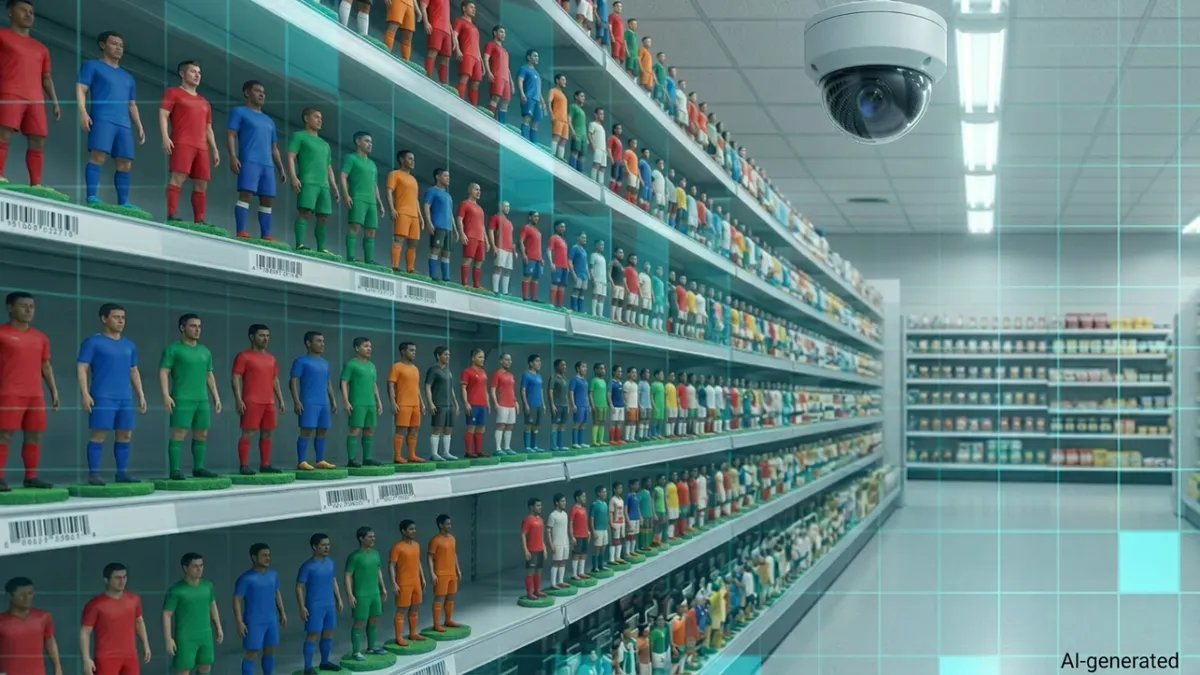
Problem
Store shelves degrade quietly all day long. Products sell out, drift out of place, and price labels go stale. Because there is no single decisive moment, the problem stays invisible while the cost accumulates. Alert staff about everything and the signal drowns in noise; alert them about nothing and customers find the gaps first.
Solution
Apply the same vision AI principles behind football's semi-automated offside system — fixed geometry, trained object models, comparison against a reference state (the planogram) — and the gap between where every SKU should be and where it actually is becomes a math problem. The key is prioritization: surface only the deviations that matter right now.
Outcome
- Automatic SKU-level detection of out-of-stocks, misplacements, and pricing errors
- Prioritized alerts so associates fix problems before customers notice
- Full-store coverage from fixed, mobile, and robot cameras combined
- Same principle, different rhythm: football captures one millisecond; shelves degrade continuously
If you've watched an offside decision come back within seconds at this summer's World Cup, you've seen vision AI at work — and it operates on strikingly similar principles to the technology watching shelves in retail stores. Here is Scandit's side-by-side comparison of the two systems.
Vision AI on the Pitch: Semi-Automated Offside
FIFA deployed a vision AI system to support offside decision-making. The setup:
- All 1,248 tournament players stepped into a scanning booth to create individual 3D avatars with precise limb dimensions.
- 16 stadium cameras capture player positions 50 times per second, tracking 29 body points per player.
- A sensor inside the ball transmits 500 times per second, pinpointing the exact moment the ball leaves a player's boot.
- Body positions at the moment of the kick are checked against the offside line, and decisions come back within seconds.
Vision AI in the Store: Shelf Intelligence
The same principles, aimed at a different goal: the perfect shelf. Correct stock levels, correct placement, correct pricing — with the planogram as the reference.
Just as football needed individual player scans because generic human shapes weren't precise enough, shelves need more than generic bounding-box detection. A bounding box can tell you something large is present; it cannot tell you whether a specific SKU is correctly placed and properly oriented. That takes SKU-level models trained on product design, dimensions, and orientation.
Fixed cameras are joined by associates' mobile cameras and autonomous robots to track shelf state. When errors are detected, prioritized alerts guide store associates to restore products to their correct positions — before customers notice.
The Two Systems, Side by Side
| Technology dimension | Offside monitoring | Shelf intelligence |
|---|---|---|
| Camera setup | Fixed stadium roof cameras covering the pitch | Fixed, mobile, and robot cameras covering the store |
| Object detection | Each player tracked as a unique object | Each SKU tracked as a unique object |
| Tracking model | 29 skeletal keypoints per player | SKU-level models trained on design, dimensions, orientation |
| Reference comparison | Player position vs. offside line | Shelf state vs. planogram |
| State change detection | The millisecond the ball leaves the boot | Out-of-stock, misplaced, or mispriced products |
| Automated alerting | Offside alert to VAR officials | Prioritized alerts to store staff |
| Decisive action | Officials make the call | Associates complete guided fixes |
Both systems work because of fixed geometry. The pitch stays constant and cameras capture consistent images, so every measured position references a stable frame. Shelf intelligence operates identically: cameras photograph the same view, shelves stay put, and planograms define what "correct" looks like. Everything vision AI sees is seen in context — deviations from the reference state become a simple matter of math.
The Key Difference: One Moment vs. Continuous Decay
One significant distinction remains. Football captures a single moment — the ball's departure triggers the call, and speed drives everything.
Shelves pose a harder problem. They degrade continuously through operating hours as products sell and errors accumulate. No single moment defines the problem; the cost builds quietly over time.
Yet both systems solve the same prioritization challenge. Officials don't need every player's position every second — they need an alert when someone crosses a line. Associates don't need a notification for every shelf image or minor misplacement — they need to know when a best-seller drops below threshold during peak hours, or a high-velocity SKU disappears from the shelf. The right call at the right moment, without the noise — the goal is identical.
Toward the Perfect Shelf
This summer's tournament shows what fixed cameras, trained object models, and reference states make possible: previously impossible decisions at the required speed and accuracy.
Retail has understood the principle for years. The shelf is the pitch. The planogram is the offside line. Products are the players. And the camera keeps asking the same question: Is it where it should be?
For Korean stores, the practical starting point needs no ceiling cameras at all — associates' smartphones can scan shelves today. For the technical background, see computer vision AI in retail; for store scenarios, see our retail industry page. Data Connect's technical team supports adoption reviews.
FAQ
Related Posts
3 Things More Important Than Technology in AI Adoption
85% of enterprises are adopting AI, but only 39% see measurable results. Here are the three conditions that actually determine whether technology creates value — from the field.
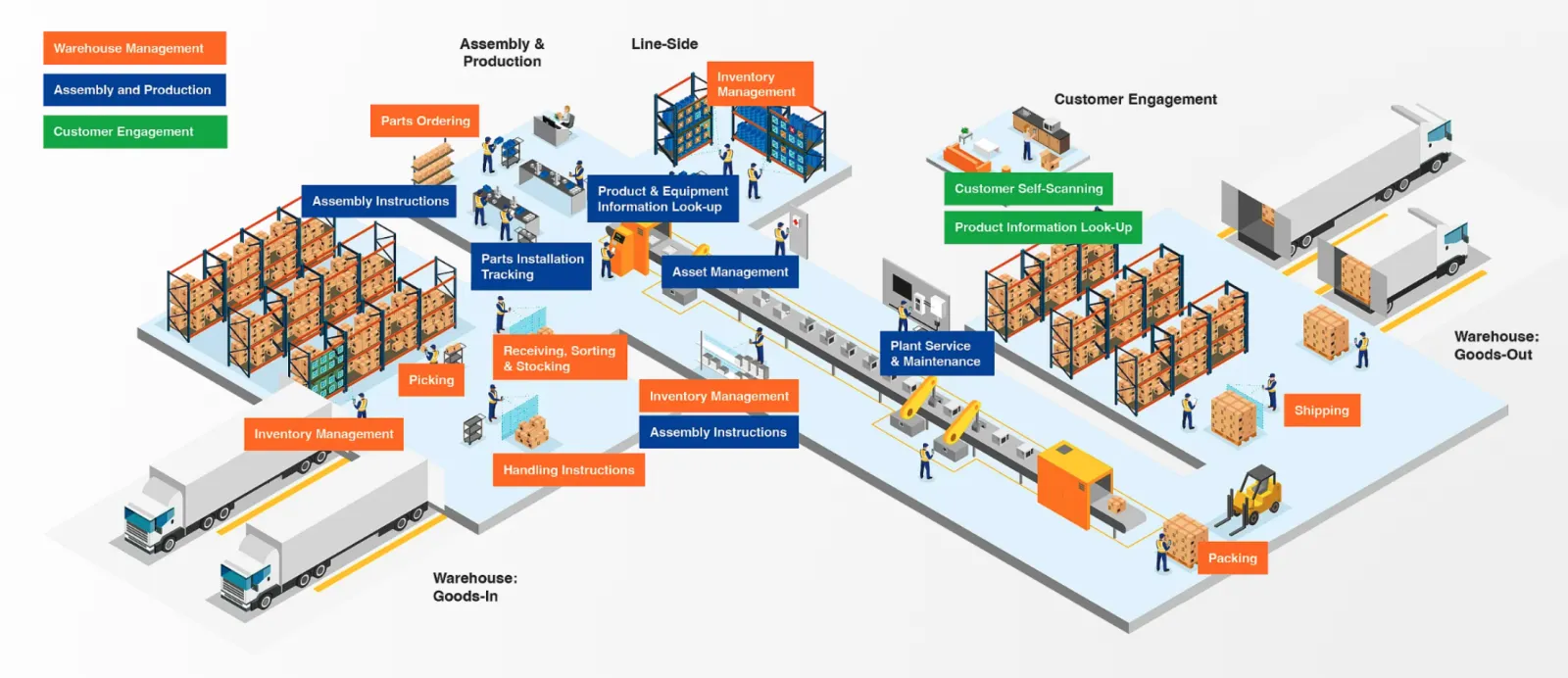
Manufacturing AI Precision Is Determined by Shopfloor Data
80% of AI projects fail, and 70% of those failures trace back to data quality. Automating data touchpoints from receiving to shipping is the prerequisite for AX success.
Manufacturing AI: Where Should You Actually Start?
More manufacturers are pouring millions into robot and digital twin POCs — only to see them collapse at the pilot stage. Here's why AX without DX fails, and where the real starting point is.