

Warehouse Robotics Meets Barcode Scanning: Automating Without Replacing Workers
Problem
Warehouses face mounting pressure to increase throughput and accuracy while labor shortages make it harder to scale operations. Manual scanning workflows create bottlenecks in picking, putaway, and inventory counting that human effort alone cannot resolve at the speed modern fulfillment demands.
Solution
Autonomous mobile robots (AMRs) and automated guided vehicles (AGVs) equipped with integrated barcode scanning and machine vision handle repetitive, high-volume tasks like inventory audits and order transport, while human workers focus on exception handling, quality decisions, and complex picking scenarios that require judgment.
Outcome
- Inventory cycle count time reduced by up to 70% through robotic shelf scanning
- Order picking throughput increased by 30-50% with AMR-assisted workflows
- Human workers redeployed to higher-value tasks requiring judgment and flexibility
The warehouse of 2025 is neither fully manual nor fully automated. It is a hybrid environment where robots and humans work side by side, with barcode scanning as the fundamental data capture layer connecting them.
The Rise of Autonomous Mobile Robots in Logistics
Autonomous mobile robots (AMRs) have moved beyond pilot programs into mainstream warehouse deployment. Unlike their predecessors — automated guided vehicles (AGVs) that follow fixed magnetic tracks — AMRs navigate dynamically using LIDAR, computer vision, and onboard mapping.
They adapt to changing warehouse layouts, avoid obstacles, and operate safely alongside human workers without requiring infrastructure modifications.
In practical terms, AMRs now handle three core workflows:
- Goods-to-person picking — bringing shelves or totes to stationary pickers
- Zone-to-zone transport — moving completed orders from picking stations to packing areas
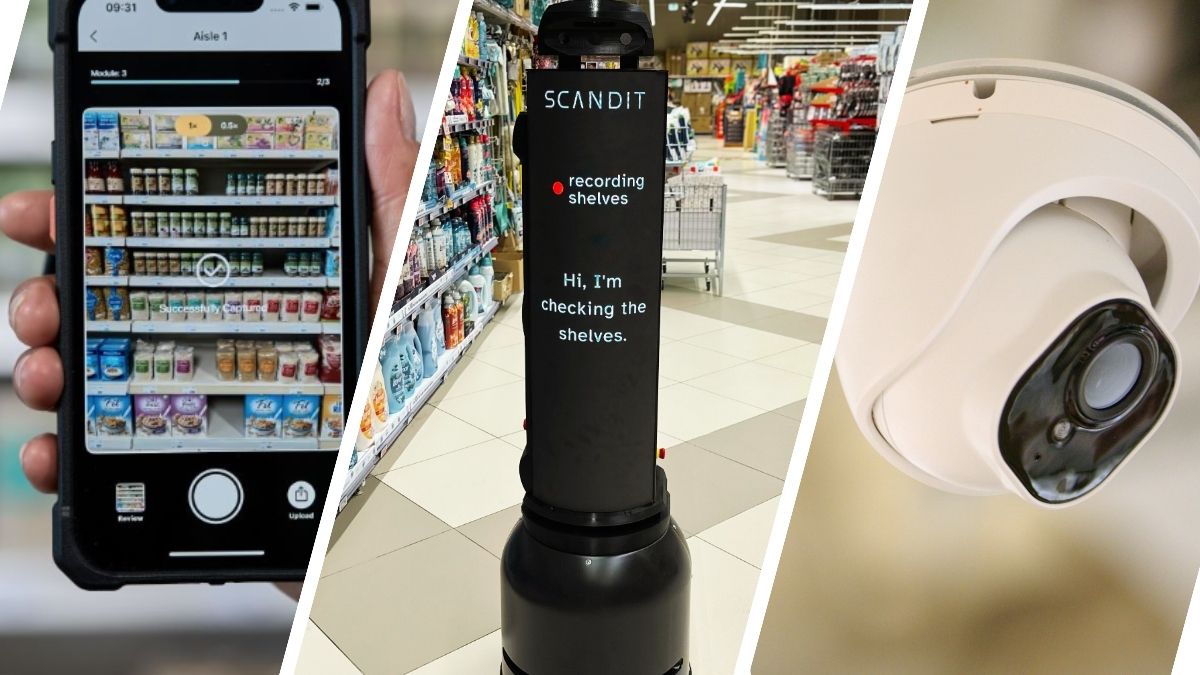
- Autonomous inventory counting — navigating aisles overnight to scan every shelf location
Each of these depends on reliable, high-speed barcode scanning integrated directly into the robot's vision system.
Machine Vision and Multi-Barcode Capture on Robotic Platforms
The scanning requirements for robotic platforms differ from handheld scanning in important ways. A robot moving through an aisle at walking speed needs to capture dozens of barcodes per second across varying distances and angles, often reading codes on shelves from floor level to three meters high.
The scanning software must handle:
- Motion blur from continuous movement
- Mixed lighting from skylights and artificial sources
- Partially obscured labels blocked by adjacent products
Modern scanning SDKs designed for embedded deployment address these challenges through multi-barcode recognition in a single camera frame, adaptive exposure control, and AI-powered decoding that maintains accuracy even with damaged codes.
When integrated with the robot's navigation system, this creates a continuous scanning pipeline — the robot knows its position, the camera captures and decodes barcodes, and the warehouse management system receives real-time inventory updates without any human intervention.
Augmenting Workers, Not Replacing Them
The most successful warehouse automation strategies position robotics as a force multiplier for human workers, not a replacement.
Robots excel at repetitive, physically demanding tasks:
- Transporting heavy totes across a 50,000-square-meter facility
- Counting inventory across thousands of shelf locations
- Maintaining consistent throughput during overnight shifts when human fatigue peaks
Human workers, freed from these tasks, focus on activities where their judgment is irreplaceable:
- Resolving exceptions when a barcode does not match the expected item
- Making quality decisions on damaged goods
- Handling fragile or irregularly shaped products that robots cannot grip
- Managing customer-specific packaging requirements
The barcode scanning layer ties both worlds together. The same data capture platform that powers the robot's vision system also runs on the handheld smartphones used by human workers, ensuring unified and consistent data flow throughout the operation.