

Introduction
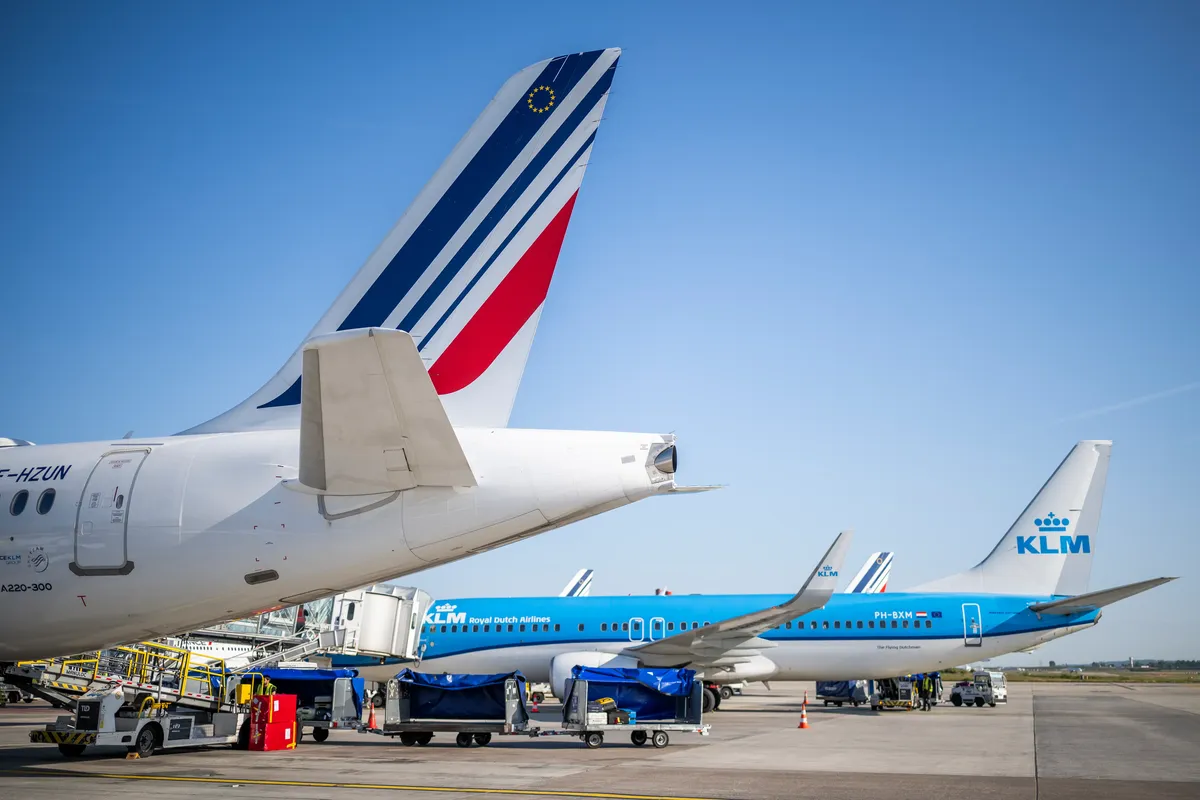
Air France-KLM is one of Europe's leading airline groups, carrying more than 76.7 million customers a year to over 300 destinations. In a highly regulated, fiercely competitive industry, document accuracy at check-in directly shapes on-time departures and customer experience. The group's core challenge: get passengers to submit accurate Advance Passenger Information (API) during online check-in — easily, accurately, and early.
Challenge
The incumbent passport scanning solution had lower-than-expected completion rates. Passengers who failed to scan fell back to manual entry or arrived at the gate with incomplete documentation, driving up the 'ineligible to board' rate — passengers requiring manual checks at departure gates. Airlines also face government fines for transporting passengers with incorrect or incomplete documents. On top of that, typos from manual entry were eroding data quality in Flying Blue loyalty profiles. Air France-KLM needed scanning robust enough to fully replace manual entry: reliable under glare, awkward angles, and variable camera quality, resilient to mobile OS updates, and with built-in user guidance requiring no internal maintenance.
Solution
Air France-KLM selected Scandit after a rapid proof of concept completed in roughly one week, testing against edge cases — low-resolution cameras, lower-end smartphones, poor lighting — where Scandit performed consistently. ID Bolt, the browser-based scanning component, went onto the Air France and KLM websites; the ID Scanning SDK was integrated into both airlines' mobile apps. On-device MRZ processing eliminated the latency and connectivity issues of server-side solutions. The February 2025 rollout started at check-in, then expanded earlier into the journey (MyTrip), and KLM made document scanning mandatory before check-in opens.
Why SCANDIT
On-device processing removes the latency and connectivity problems of server-side solutions, so passengers can scan instantly from homes, hotels, and lounges. ID Bolt ships with built-in user guidance and QR device handover (desktop to mobile) out of the box, delivering high completion rates without internal maintenance overhead. Integration was fast enough that the web team called it 'plug-and-play — the fastest implementation I've seen.'
Overview: A Check-In Challenge at Europe's Leading Airline Group
Air France-KLM carries more than 76.7 million customers a year to over 300 destinations. In a heavily regulated industry, document accuracy at check-in feeds directly into on-time departures and customer experience.
Customers have always been able to enter passport details from home — the problem was getting them to do it easily, accurately, and early.
— Laurens Jansma, Senior Product Owner, Passenger Clearance, Air France-KLM
Challenge: Ineligible-to-Board Rates, Fines, and Data Quality
The existing scanning solution's completion rates fell short of expectations, so passengers resorted to manual entry or arrived at gates with incomplete documentation. The "ineligible to board" rate — passengers requiring manual checks at departure gates — creates operational friction, delays, and frustration.
The regulatory stakes are real: airlines face government fines for transporting passengers with incorrect or incomplete documentation.
Even if you have a document that you think you have scanned properly, but there's a misread, you still get a fine.
— Laurens Jansma, Air France-KLM
Flying Blue loyalty members can store scanned passports for future trips, but scanning failures forced manual entry, introducing typos and unreliable data into customer profiles. The airline needed scanning robust enough to completely replace manual entry. The requirements were clear: reliability in real-world conditions (glare, angles, variable camera quality), compatibility across mobile OS updates, and built-in user guidance with no internal maintenance overhead.
Solution: ID Bolt on the Web, ID Scanning SDK in the Apps
Air France-KLM selected Scandit after a rapid proof of concept — completed in roughly a week — that tested edge cases such as low-resolution cameras, lower-end smartphones, and poor lighting. Scandit performed consistently across all of them.
Deployment ran on two tracks: ID Bolt, the browser-based scanning component, on the Air France and KLM websites, and the ID Scanning SDK inside both airlines' mobile apps. On-device MRZ processing eliminated the latency and connectivity issues that plague server-side solutions — critical for passengers scanning from homes, hotels, and lounges.
The February 2025 rollout targeted check-in first, the highest-traffic touchpoint. As confidence grew, scanning moved earlier into the journey via MyTrip, letting customers scan and store passports immediately after booking.
Not only is scanning now surfaced as the default route for Air France, we now enforce for KLM that you need to scan your documents in the window before check-in opens.
— Laurens Jansma, Air France-KLM
ID Bolt's QR device handover moves customers from desktop check-in to mobile scanning without breaking the session — replacing the incumbent's one-in-three completion rate with far higher conversion. Scanning coverage has also expanded beyond passports to permanent resident cards.
Integrating Scandit was really smooth and fast — it's a plug-and-play ID scanning solution. The fastest implementation I've seen.
— Information Specialist, Air France-KLM Web Team
Results: 8.4 Million Scans, 29% Fewer Gate Interventions
Air France-KLM processed more than 8.4 million travel documents through Scandit in 2025. Monthly scans grew from 250,000 in the first half of 2025 to 750,000 after KLM's mandatory scanning rollout.
At KLM's Amsterdam hub, we have seen around a 29% reduction in passengers ineligible to board.
— Laurens Jansma, Air France-KLM
Fewer gate interventions mean shorter queues, lighter agent workload, and lower departure delay risk. 91% of users who open ID Bolt complete their scan, and the QR handover screen converts at 85%, up from 33% previously. Roughly one-third of customers now arrive fully travel-ready before check-in even opens.
One change I saw after deploying Scandit, was that all of a sudden we started seeing positive feedback about the ID scanning.
— Laurens Jansma, Air France-KLM
Our Scandit deployment has been stable since go-live. It's delivering exactly what we need — fast and accurate MRZ scanning that just works.
— Information Specialist, Air France-KLM Web Team
What's Next: Scanned Documents Only
In early 2026, Air France-KLM deleted all manually entered passports from Flying Blue profiles, making Scandit scanning the only way to add travel documents. As scanned entries replace manual data, loyalty profile quality keeps improving — turning a compliance requirement into loyalty value.
My advice to peers at other airlines who are dealing with the same document scanning and data accuracy challenges: run a proof of concept with Scandit in your own environment.
— Laurens Jansma, Senior Product Owner, Passenger Clearance, Air France-KLM
Impact
Air France-KLM processed more than 8.4 million travel documents through Scandit in 2025. Monthly scans tripled from 250,000 to 750,000 after KLM made scanning mandatory, and the ineligible-to-board rate at KLM's Amsterdam hub fell 29% — shrinking gate queues, agent workload, and departure delay risk. 91% of users who open ID Bolt complete their scan, and QR handover conversion jumped from 33% to 85%. Roughly one-third of customers are now fully travel-ready before check-in opens. In early 2026, the group deleted all manually entered passports from Flying Blue profiles, making Scandit scanning the only way to add documents — locking in database trustworthiness.