
Loading...
INDUSTRY — Healthcare
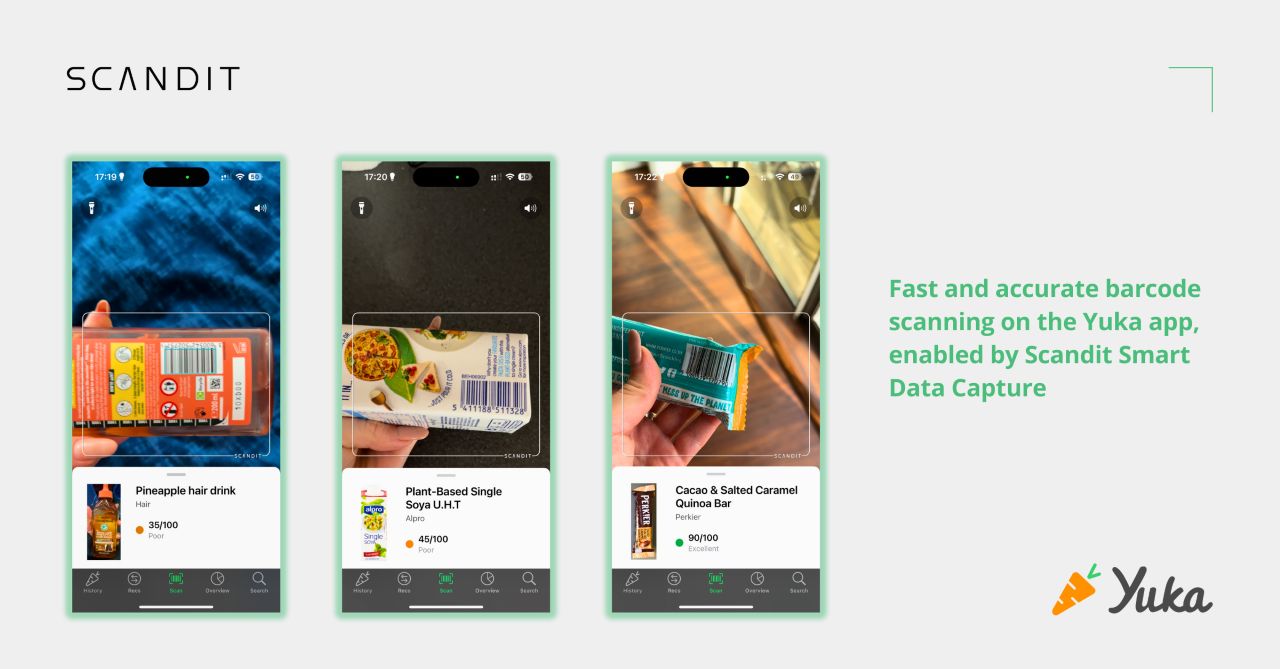
From medication serial verification to pharmacy dispensing and patient-facing web services — handled by smartphone cameras and web browsers. Japanese healthcare DX company MG-DX and Yuka, the health app used by 76 million people, already work this way.
Field challenges
The tiny DataMatrix and split QR codes on medications defeat generic libraries. Every failed scan turns into a support inquiry or manual entry.
Checking drug names and serial numbers by eye and keying them in invites typos. In other industries that means rework — with medication, it becomes a safety issue.
Pharmacy counter lighting, crumpled packaging, curved containers — under real conditions, basic camera scanning accuracy drops off sharply.
Solutions by workflow
The Scandit SDK goes into pharmacy and hospital systems — or patient-facing web services — as a scanning capability, so you adopt it workflow by workflow without replacing operational systems.
Scan directly in the web browser. MG-DX fixed its e-medication-notebook QR recognition problems with the Web SDK, driving related support inquiries to zero.
Repetitive scanning for dispensing and inventory runs on a proven built-in UI. No screen design needed — apply it as is.
Capture dozens of boxed medications in one camera view, with quantities counted. The starting point for expiry management.
Capture the barcode and text on ID documents to automate identity checks. Manual entry errors disappear.
Proven numbers
0
QR-scan support inquiries — after switching the e-medication notebook to web scanning
MG-DX (CyberAgent group)
85 scans/sec
Scan throughput — 2.7 billion scans in 2024
Yuka health app
76 million
Users on this recognition engine — serving 12 countries
Yuka health app
Figures from customer case studies published on this site.
Customer stories
FAQ
Take the first step toward digital transformation with Data Connect.