Patients Are Now Reading Their Own Medicine Barcodes With a Phone
Executive Summary
On November 20, 2025, GS1 announced a collaboration with Google. The surface story is patient safety: "Point a phone camera at a medicine package and information opens — no app required." The deeper story sits elsewhere. The 16 billion barcodes already printed on pharmaceutical packaging, which had only ever lived inside supply chains, were just promoted into a direct consumer-facing interface — operated by the patient with their own phone. The same mechanism is poised to extend into food, cosmetics, and other industries.
The GS1–Google Collaboration
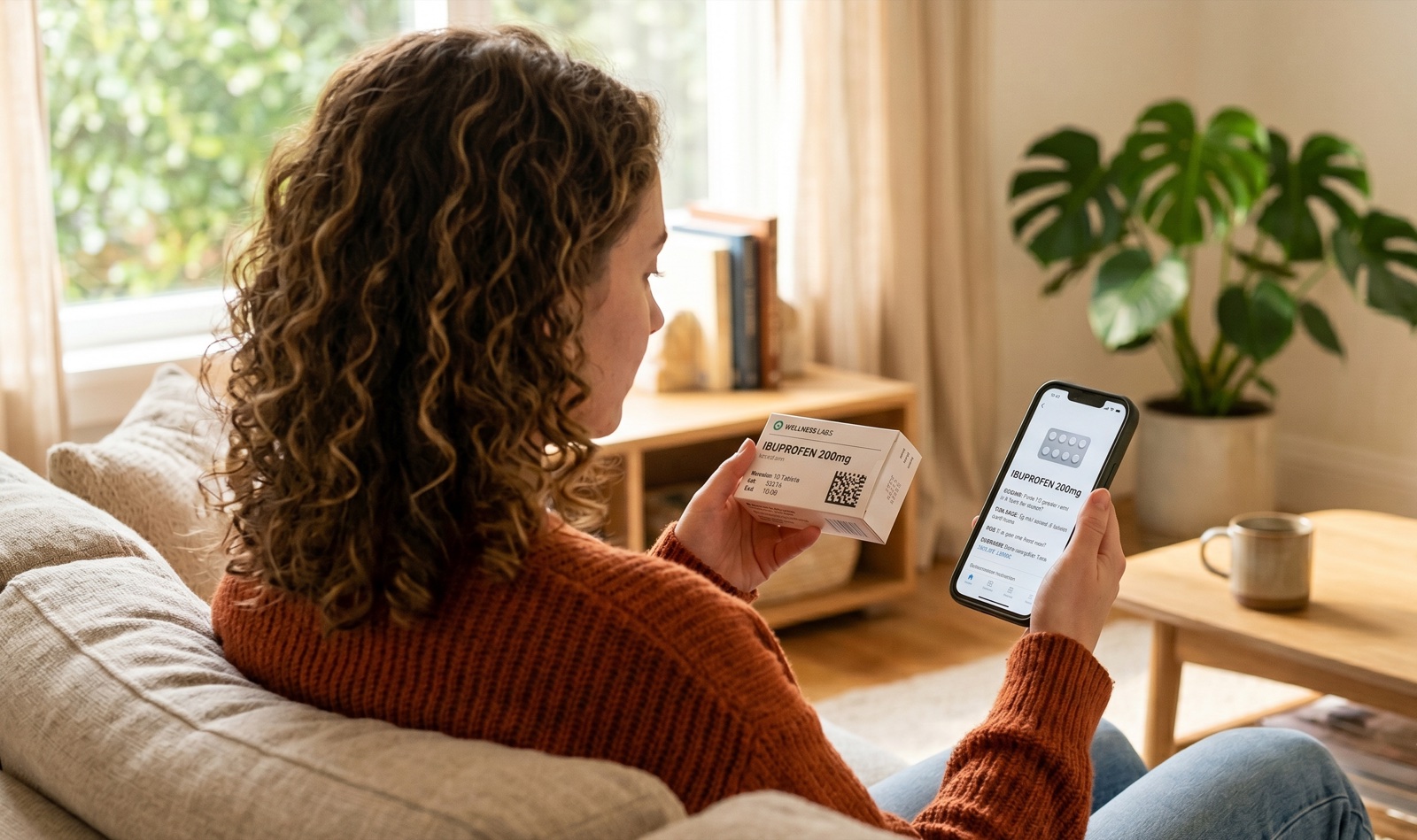
GS1 and Google announced on November 20, 2025 that Google Lens would natively recognize GS1 DataMatrix barcodes printed on pharmaceutical packaging — no separate app needed. A user simply points their smartphone camera at the package and is taken directly to the manufacturer-registered information page.
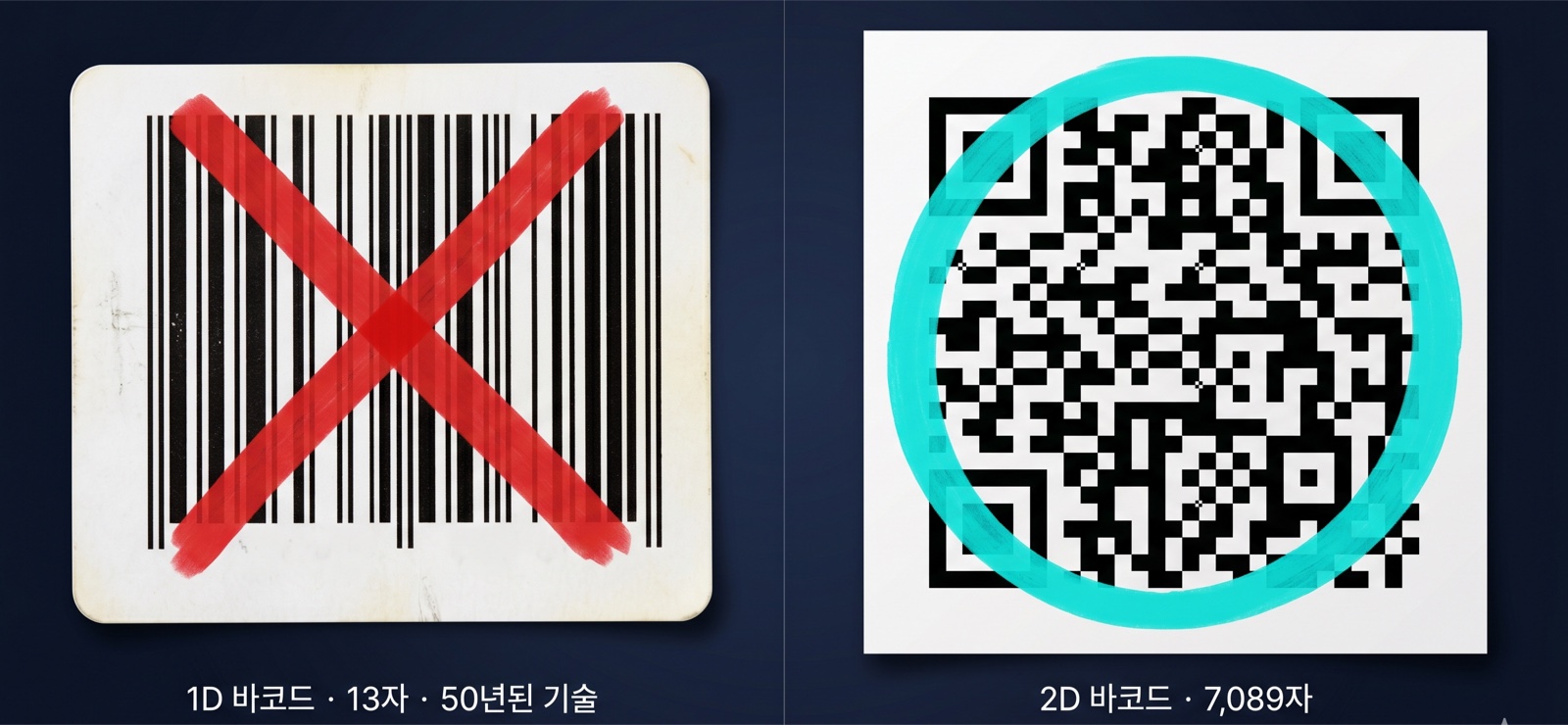
According to GS1, approximately 16 billion pharmaceutical packages across the US and EU already carry GS1 DataMatrix. From a patient's perspective, this means medicine information is one camera frame away — for a drug bought abroad, prepared by a family member, or kept in a cabinet for years.
Enabling people to easily access trusted medicine information directly from their smartphone is a meaningful step forward for global health transparency and will help patients and professionals act with greater confidence.
— Renaud de Barbuat, GS1 President & CEO (2025-11-20)
Three Forces Converging at the Same Moment
This collaboration arrived in 2025 because three independent threads finally lined up.
First, EU digital leaflet legislation crossed the threshold from possible to imminent. On December 11, 2025, the EU reached provisional agreement on a revised pharmaceutical regulation, locking in electronic product information (ePI) as mandatory from marketing authorization onward. The shift from paper leaflets to digital is now regulation, not aspiration.
Second, the standard matured. GS1 Digital Link was first published in 2018 and refined in v1.3 in 2022. The technology was ready, but the consumer-side reader was missing — "who actually reads this on the user's side?" Google Lens's native support filled that gap.
Third, AI search needs trusted sources. ChatGPT, Claude, Gemini, and Grok increasingly need an unambiguous citation framework — a canonical URL registered by the manufacturer itself — when answering product-related questions.
Four Facts Worth Watching Closely
1. A dormant infrastructure just woke up
Those 16 billion DataMatrix codes were exclusively B2B until now — pharmacy inbound verification, wholesaler shipping, counterfeit checks. The Google Lens integration extends the same infrastructure into a patient-operated interface, instantly. The most significant change is that no new physical infrastructure is required; the asset has merely been re-purposed.
2. Pressure to adopt GS1 Digital Link increases
Older formats like GS1-128 or EAN-13 carry only an identifier. For Google Lens to open a meaningful page, the barcode must contain a web URL alongside the identifier — the structure defined by GS1 Digital Link. For manufacturers, GS1 Digital Link moved from "a standard to consider eventually" to "a standard to seriously evaluate at the next label revision."
3. AI search has been identifying products through GS1 for years
This announcement did not create a new pattern. The GS1 → AI search connection has been operational for nine years.
- Google Shopping has required GS1's GTIN (Global Trade Item Number) as a product identifier since 2016, and as of 2025, new product listings effectively require GTINs.
- Google's Product structured data (schema.org/Product) includes
gtinas a standard field, meaning every product page is indexed by GS1 identifier. - Per Google's April 2025 public position, pages with explicit structured data are more likely to be cited in AI Overviews. ChatGPT, Claude, Gemini, and Grok are moving in similar directions.
In other words, the chain "physical product → GS1 GTIN → manufacturer page → AI search citation" has been working for years. This collaboration completes the last link — from medicine packaging to the patient's phone.
4. Which industry moves next?
"Patient safety" is socially difficult to argue against. The pattern that worked for pharmaceuticals is positioned to extend. The EU is already discussing QR-based nutritional information for food, and the US laid groundwork for cosmetics digital labeling with MoCRA (Modernization of Cosmetics Regulation Act) in 2022. Food, cosmetics, apparel, and electronics — all GS1-anchored — are candidates. Which one moves, when, and how fast is what the next several years will reveal.
What Could Happen Next
| Stakeholder | Short-term (6–12 months) | Long-term (3–5 years) |
|---|---|---|
| Pharmaceutical manufacturers | Evaluate label format conversion to GS1 Digital Link | EU/US new approvals subject to ePI mandate |
| Pharmacies and hospitals | Increase in patient questions verifying "digital information accuracy" | Dispensing systems directly integrated with digital leaflets |
| Regulators (incl. MFDS Korea) | Monitor EU and US progress | Policy decisions on domestic scope and timing |
| Food and cosmetics manufacturers | Internal recognition: "We could be next" | Consider GS1 Digital Link at the next labeling revision |
| Consumer scan apps | Basic lookup market absorbed by OS-level features | Differentiation shifts to payment, loyalty, personalization |
Open Questions That Remain Honest
Several uncertainties deserve to be named, not glossed over.
- When will Korea move? Korea has mandated pharmaceutical serialization since 2015, but the Ministry of Food and Drug Safety has not yet published an official stance on patients reading medicine barcodes directly for information.
- How secure is the canonical URL system? Fallback and audit mechanisms for cases where a manufacturer-registered URL expires or is tampered with are not yet clearly defined.
- How long will legacy barcodes coexist with GS1 Digital Link? Transition will not happen overnight, and clear milestones for the coexistence period are still missing.
- Where is the privacy boundary for scan behavior data? Standards have not yet been established for how scan data (who scanned what medicine, when) is collected or shared.
- What about non-GS1 ecosystems? Whether Amazon, Chinese D2C platforms, and other non-GS1 identifier ecosystems will join this flow is unknown.
Closing
The headline of this announcement is not "you can now scan medicine barcodes with your phone." It is that the GS1 ↔ Google ↔ AI search chain — already operational for nine years — has now reached the patient's hand. Korea is among the countries already printing GS1 DataMatrix on pharmaceutical packaging, so the technical infrastructure is in place. Two variables remain: whether manufacturers register canonical product URLs in GS1 Digital Link format, and when the Ministry of Food and Drug Safety chooses to formalize this shift in policy. The EU and the US have taken the first step. The same question is about to be asked of the Korean market.
Healthcare and pharmaceutical barcode use cases are covered in more depth on our healthcare solutions page.
References
GS1® and GS1 Digital Link™ are trademarks of GS1 AISBL. Google™ and Google Lens™ are trademarks of Google LLC. References herein are for editorial purposes.
Data Connect is the official SCANDIT partner in Korea, covering enterprise data capture industry trends and standards.