

Thinking About Replacing Your PDA Fleet? A 7-Point Checklist Before You Switch to Smartphones
Problem
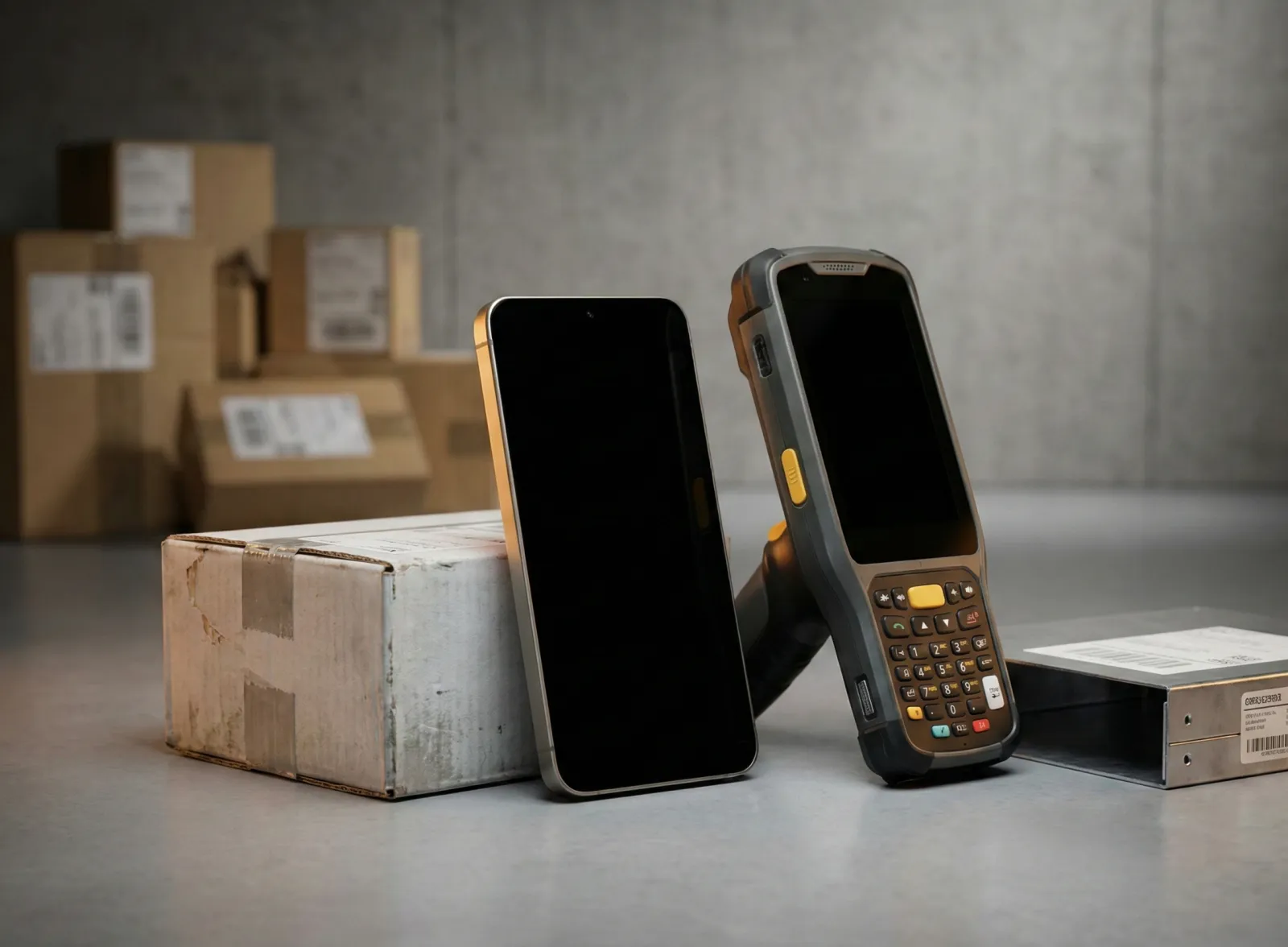
When warehouse or store PDAs start failing more frequently, or the manufacturer announces end-of-life, teams face a replacement decision. Most default to reordering the same vendor's next model out of habit. Without re-evaluating scan performance, durability, deployment, and integration with existing systems, you end up repeating the same cost structure for another 5-7 year cycle.
Solution
A PDA replacement cycle is the best time to also evaluate whether smartphone-based software scanning makes sense. Running the decision through seven criteria — scan performance, ruggedness, MDM deployment, battery operations, WMS/ERP integration, training overhead, and total cost of ownership — gives you a defensible answer instead of a gut call.
Outcome
- Avoid locking in another cost cycle by reordering the same hardware out of habit
- Confirm upfront whether a 60%+ hardware cost reduction is realistic for your fleet
- Surface hidden transition costs like MDM and system integration before committing
- Make the replace-vs-switch decision on evidence, not instinct
How to tell if it's actually time to replace your PDAs
Industrial PDAs are a 5-7 year asset once deployed, so when replacement time comes, the path of least resistance is reordering the latest model from whatever brand you already run. Budget approval is familiar, and floor staff don't have to relearn anything.
The problem is that this habit locks in the same cost structure for the next cycle too. Failure rates, repair delays, and end-of-life risk repeat themselves five years later. With smartphone camera performance now closing in on dedicated scanners, more teams are using the replacement decision point to evaluate a switch to smartphone-plus-SDK scanning instead. The seven criteria below help you figure out whether this is that moment.
The 7-point checklist before you switch
1. Scan performance — First, separate whether your current misreads and rescans are a hardware limitation or a software configuration issue. What matters is how reliably the system reads damaged barcodes, shrink-wrapped labels, and barcodes at a meter or more of distance — under your actual floor conditions, not a spec sheet. Test with your own barcode samples.
2. Ruggedness and casing — Cold storage (below -18°C), dusty manufacturing floors, and loading dock environments call for IP65+ rated, drop-tested rugged cases. If your workforce is mostly indoors, a standard case is usually enough.
3. MDM deployment — Once you're talking dozens or hundreds of smartphones, you can't install apps device-by-device. You need kiosk mode, remote app deployment, and remote wipe for lost devices — in other words, a proper MDM setup — for this to actually be operable at scale.
4. Battery operations — If your floor runs three shifts or eight-plus hours of continuous scanning, battery drain becomes a real operational issue. Check how power-efficient the scanning UI is designed to be, and whether you have a charging cradle or battery-swap plan between shifts.
5. Existing WMS/ERP integration — The scanning SDK itself just reads barcodes and hands results to your app. The real question is how cleanly the app receiving those results talks to your existing WMS or ERP. If your business logic is tightly wired to a specific PDA vendor's proprietary API, scope that rework first.
6. Training overhead — Most floor staff already carry a personal smartphone, so training time typically drops from hours to around 30 minutes compared to a dedicated PDA. That said, the learning curve for a new business app's UI is a separate consideration.
7. Total cost of ownership (TCO) — Don't compare purchase price alone. PDAs carry a recurring cost of 15-25% annual failure rates, 200,000+ KRW per repair, and month-plus repair turnarounds. Run the numbers over three years and a smartphone-SDK approach commonly cuts hardware cost by 60% or more.
If you've checked every box
Walk through all seven criteria and most teams land on the same conclusion: performance and durability aren't the concern, MDM and system integration are. That part is where working with a partner who's actually done the migration cuts down on trial and error.
For PDA replacement examples in logistics and delivery operations, see our logistics industry page; for the smartphone-based scanning product lineup, check Solutions. Tell us your current PDA fleet size and floor conditions and we'll help assess whether the switch pencils out — reach out to our technical team.
If you need a practical worksheet for your own review, try our adoption checklist.
FAQ
Related Posts
Build vs. Buy an Inventory Count App — A Selection Guide for Logistics and Retail Teams
If month-end inventory counts always turn into a late night, and scan totals never quite match what's actually on the shelf, it's time to rethink your inventory count app. Here's what actually separates an off-the-shelf app from building your own on top of a scanning SDK.

How to Choose the Right Barcode Scanner in 2026
A comprehensive guide covering hardware vs software, scanning technologies, industry needs, and total cost of ownership for barcode scanner selection.