RFID vs Barcode in Retail: Why the Smartest Strategy Uses Both
Problem
Retailers often frame the RFID versus barcode decision as an either-or choice, leading to overinvestment in one technology while neglecting use cases where the other is clearly superior. This binary thinking creates operational blind spots.
Solution
A complementary strategy deploys RFID for bulk inventory counting and supply chain visibility while retaining barcodes for point-of-sale, customer-facing interactions, and item-level verification — with the GS1 Sunrise 2027 migration to 2D barcodes adding new capabilities to the barcode side of the equation.
Outcome
- Inventory count time reduced from days to hours using RFID for bulk scanning
- POS transaction speed maintained with barcode scanning at checkout
- 2D barcode adoption preparing retailers for GS1 Sunrise 2027 compliance ahead of schedule
RFID and barcodes are often presented as competing options. Pick one. Invest accordingly. This framing is fundamentally flawed — they solve different problems at different points in the retail value chain, and the smartest operations use both.
The False Choice Between RFID and Barcodes
Understanding where each technology delivers maximum value — and where it falls short — is essential for Korean retailers planning technology investments over the next three to five years.
The key insight: RFID dominates bulk visibility. Barcodes dominate precision and customer interaction. Neither replaces the other.
Where RFID Excels: Bulk Visibility at Speed
RFID's superpower is volume. A single reader can identify over 1,000 tagged items per second without requiring line-of-sight contact.
This makes RFID transformative for inventory counting. A full store inventory that takes a team an entire day with barcode scanners can be completed in a few hours with RFID. For apparel retailers managing thousands of SKUs across sizes and colors, inventory visibility often jumps from below 70% to above 95%.
RFID also shines in supply chain tracking, where tagged cartons and pallets are automatically registered as they pass through dock doors and warehouse zones. The technology provides passive, hands-free data capture at a scale barcode scanning cannot match.
Where Barcodes Win: Precision and Customer Interaction
Barcodes remain unmatched at point of sale. Every checkout lane worldwide reads barcodes, and the infrastructure is universal. Key advantages:
- Near-zero cost — nothing to print, no special tags required
- Universal compatibility — works with any camera-equipped device
- Customer-facing versatility — price checks, loyalty scans, product lookups
Barcodes also deliver superior item-level verification. When a warehouse picker needs to confirm the exact right product is going into the exact right order, a barcode scan provides definitive confirmation. RFID reads can be ambiguous in dense-tag environments where multiple items are within reader range simultaneously.
The GS1 Sunrise 2027 Factor
The upcoming GS1 Sunrise 2027 initiative is reshaping the barcode landscape. The global transition from traditional 1D barcodes to 2D formats like QR codes and Data Matrix at point of sale unlocks capabilities that narrow the information gap with RFID.
A single 2D barcode can encode:
- Product identification
- Batch number and serial number
- Expiry date
- A URL linking to dynamic product information
For retailers, this means barcodes are about to become significantly more powerful. Combined with AI-powered scanning that reads 2D codes instantly from smartphone cameras, the barcode side of the equation is evolving rapidly.
Building a Dual-Technology Strategy
The practical approach is to map every data capture moment and assign the right technology to each:
- RFID — receiving, cycle counts, supply chain tracking
- Barcodes — POS, order picking, customer engagement, compliance verification
Data Connect works with Korean retailers to design these hybrid strategies, ensuring that SCANDIT's scanning platform and existing RFID infrastructure operate as a unified system rather than isolated technology islands.
FAQ
Related Posts
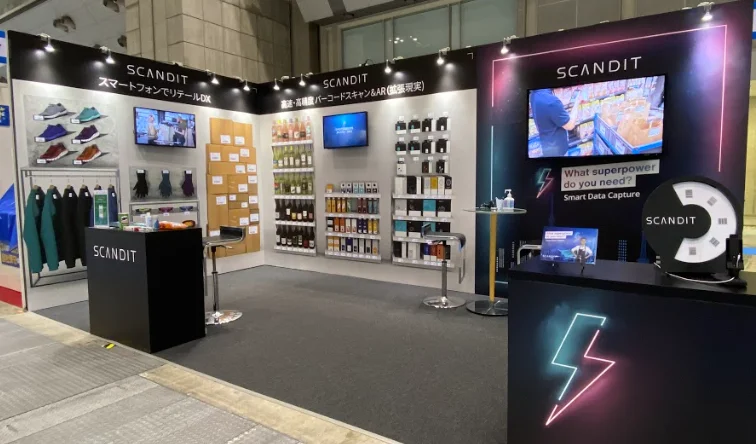
Meet Scandit at RetailTech JAPAN 2026 — March 3–6, Tokyo Big Sight
Scandit is exhibiting at RetailTech JAPAN 2026, March 3–6 at Tokyo Big Sight. Visit Booth RT6222 to see the world's leading software-based barcode scanning technology in action.
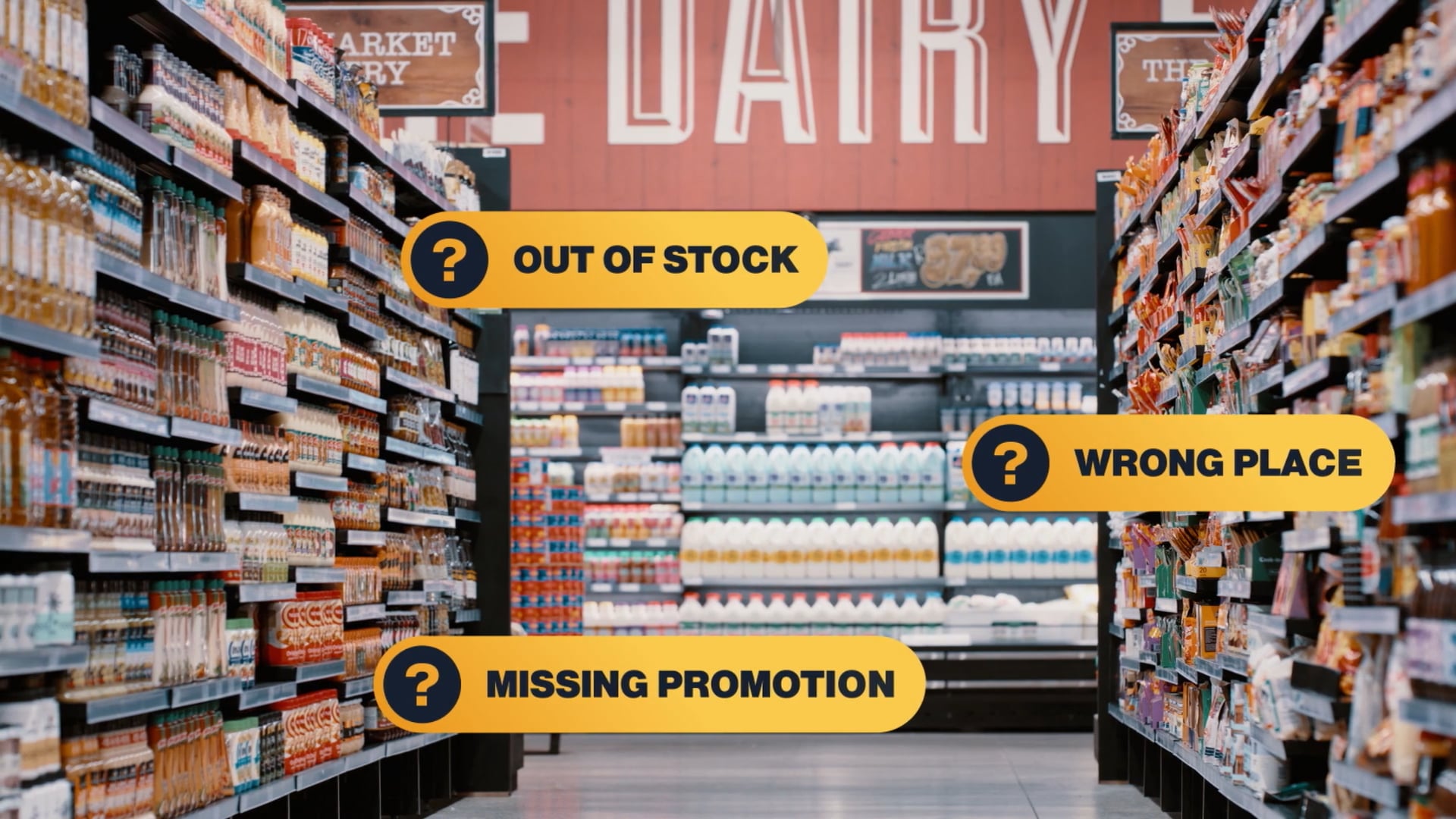
Four Pillars of Retail Computer Vision: Why Stores Need More Than Barcode Scanning
Barcode capture, OCR, shelf detection, and ID verification form a complete vision stack that gives retailers true operational visibility.
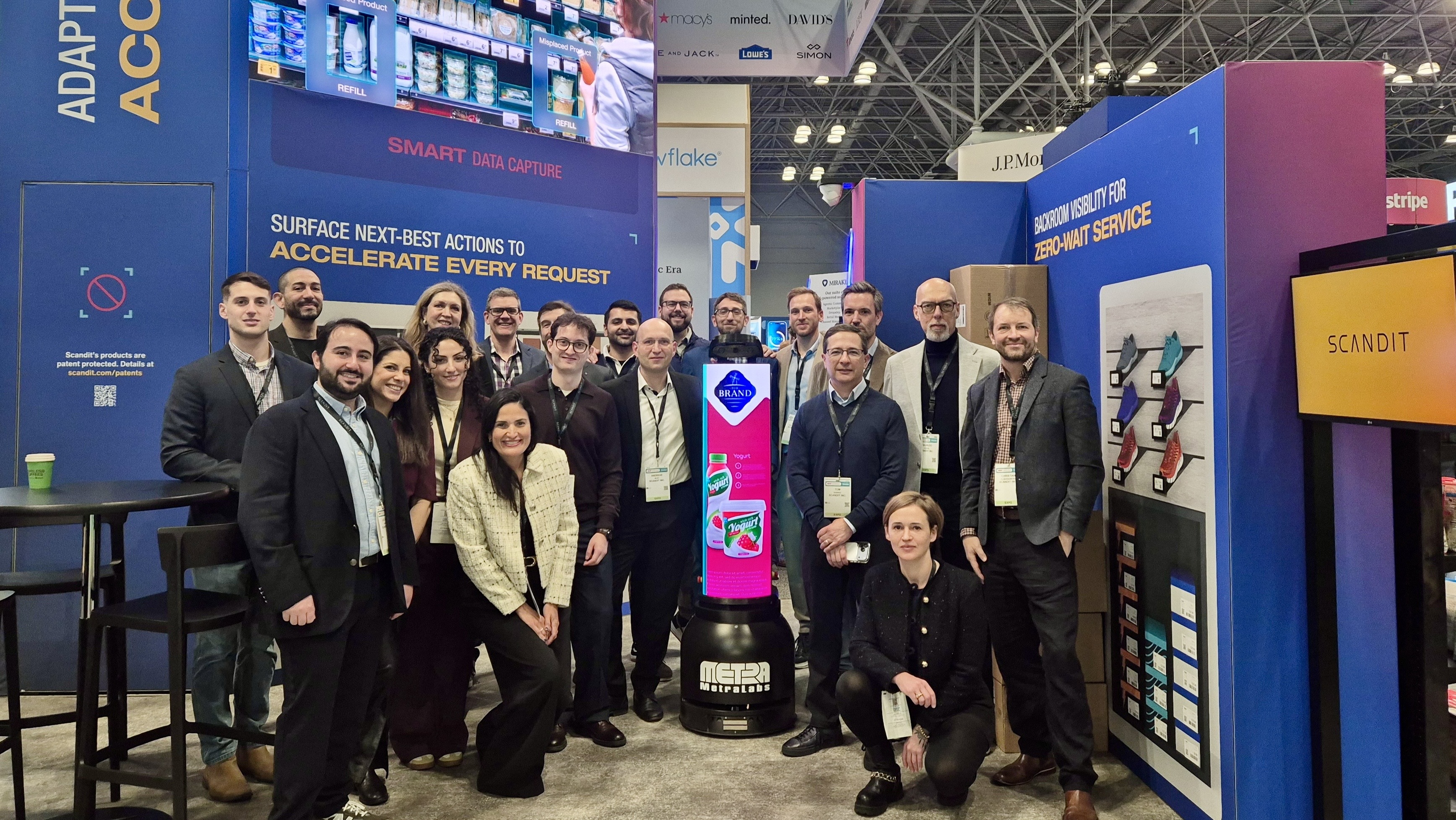
NRF 2026 Recap: Four Priorities That Defined the Conversation
Shelf accuracy, food waste, fulfillment scaling, and frontline empowerment emerged as the four themes every retailer was talking about.